What a dental implant is
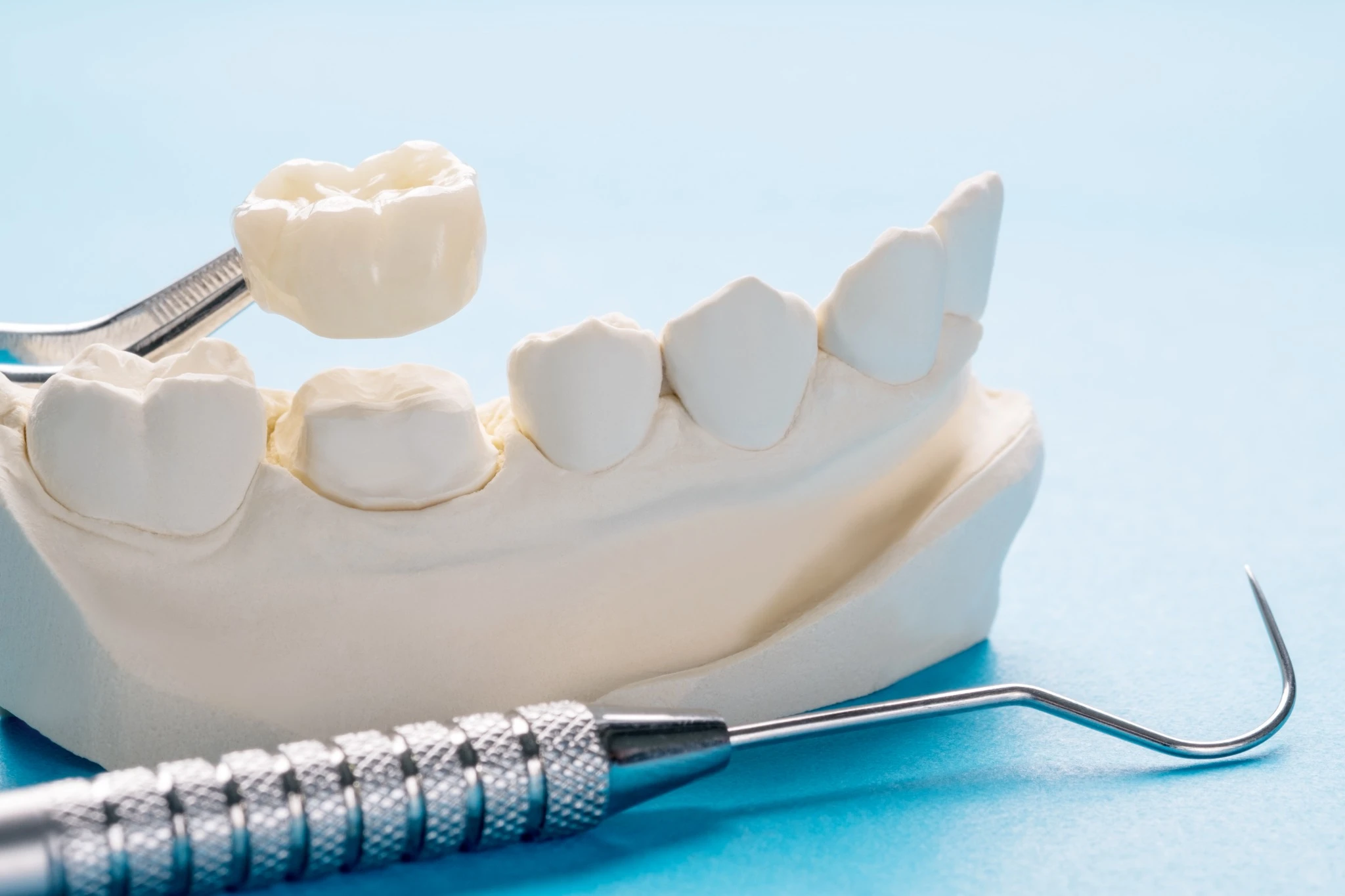
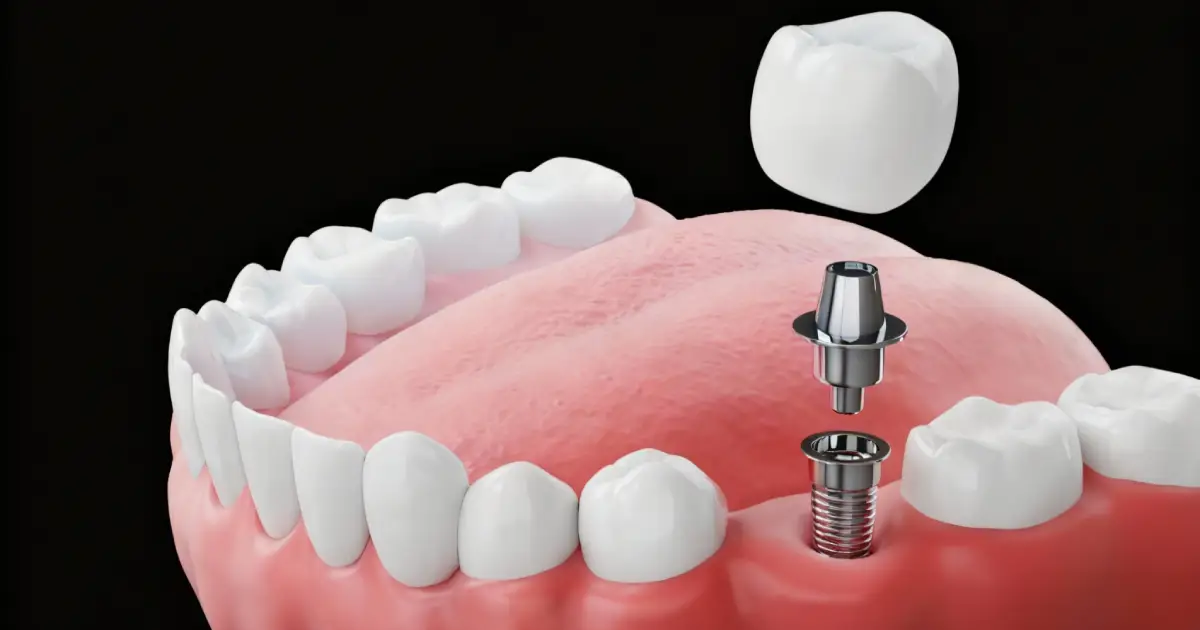
A dental implant is a small titanium post placed into the jawbone to act as the root of a replacement tooth. Once it fuses with the bone, a custom crown is attached on top.
The result looks like a natural tooth, is cleaned like a natural tooth, and — unlike a bridge — does not rely on grinding down the healthy teeth either side of the gap.
That last point is why implants have become the standard for replacing a missing tooth. A bridge borrows strength from its neighbours; an implant stands on its own.
It also does something no other option does: because the post transfers chewing forces into the jaw, it helps slow the bone loss that follows a missing tooth. Left untreated, that bone shrinkage is what causes the sunken look around the mouth years later, and it is why we rarely advise waiting.
Single tooth, several teeth, or a full arch
Implants scale to the size of the problem, and the right answer depends on how many teeth are missing and how much bone is available.
| Situation | Usual solution | Implants needed |
|---|---|---|
| One missing tooth | Single implant and crown | 1 |
| Several teeth in a row | Implant-supported bridge | 2–3 |
| A loose or uncomfortable denture | Implant-retained overdenture | 2–4 |
| A whole arch failing | Full-arch fixed bridge | 4–6 |
You do not need one implant per missing tooth. A full upper or lower arch is typically carried on four to six implants, which is why full-mouth treatment costs far less than replacing every tooth individually.
Are you a candidate for implants?
Most adults in reasonable health are candidates. What matters more than age is the amount and quality of bone at the site, and whether your gums are healthy.
- Bone volume. If a tooth has been missing for years, the ridge may have narrowed. A graft can rebuild it — this is routine, not a setback.
- Gum health. Active gum disease must be treated first. Implants fail in inflamed tissue.
- Smoking. It measurably lowers success rates by slowing healing. We will be honest with you about that rather than quietly proceed.
- Controlled diabetes. Not a barrier when it is well managed; we coordinate with your physician when it is not.
A 3D scan at the consultation answers the bone question definitively. Nobody should be quoted for implant treatment without one.
What to expect, step by step
Consultation and 3D scan
We examine the site, take a scan to measure bone height and width, and map the position of the nerve and sinus. You leave knowing whether you need a graft and what the full sequence looks like.
Any preparation needed
If the tooth is still present it may need removing, sometimes with a graft placed at the same time to preserve the ridge. Healing here takes a few months and it is time well spent.
Implant placement
The post is placed under local anaesthetic in a short appointment. Most patients are surprised by how straightforward it is — the majority report less discomfort than a tooth extraction.
Healing and integration
Over roughly three to six months the bone grows onto the implant surface and locks it in place. You are not without a tooth during this time; a temporary is provided where the gap shows.
Crown fitting
Once integrated, an abutment is attached and your custom crown is fitted, shade-matched to the teeth around it. We check the bite carefully — an implant cannot feel pressure the way a natural tooth does, so the balance has to be right.
How long implants last, and caring for them
Implants have among the highest long-term success rates in dentistry — commonly quoted above 95% at ten years — and the post itself is designed to last a lifetime. The crown on top is the wearing part and may need replacing after a decade or two, much like any other restoration.
Care is unremarkable, which is rather the point: brush twice daily, clean between the implant and its neighbours every day, and keep up your regular cleanings and checkups.
The one thing to watch for is peri-implantitis, gum inflammation around the implant, which is the main cause of late failure and is far easier to catch early at a routine visit than to fix later.
What implants cost in Fresno, and paying for them
The honest answer is that it depends on how many implants you need, whether grafting is required first, and what goes on top. We will not quote a figure over the phone that changes once we have looked at your scan. You get a written treatment plan with the full sequence and cost before anything is booked.
If you are researching before you commit, our cost of dental implants in Fresno page walks through what actually drives the price.
On coverage: most PPO plans contribute something toward implant treatment, often more than patients expect, and we verify your specific benefits before you start.
Medi-Cal / Denti-Cal coverage for implants is limited, so we will tell you plainly where you stand rather than let you find out later. Financing is available across monthly plans, and comparing implants against a bridge or denture over a ten-year horizon often changes which one looks affordable.
Affordable dental implants in Fresno
Implants have a reputation for being out of reach, and for a single tooth replaced in isolation the upfront figure is genuinely higher than a bridge or a partial denture. But the comparison people make is usually the wrong one, because it stops at the first invoice.
A bridge is typically replaced every ten to fifteen years, and each replacement costs again. A partial denture needs relining, then remaking. An implant post, cared for properly, is a one-time cost with a crown replaced perhaps once in twenty years.
Run the arithmetic across two decades rather than one appointment and implants frequently come out level or ahead — which is exactly the sum we will walk through with you rather than leave you to guess at.
There are also practical ways to bring the cost down. Treating a full arch on four to six implants costs far less than replacing teeth one at a time. Where bone has been lost, a graft placed at the moment a tooth is extracted is a fraction of the price of rebuilding a collapsed ridge years afterwards — one of the strongest arguments for not delaying.
Many PPO plans contribute more toward implant treatment than patients assume, particularly toward the crown, and staging treatment across two benefit years can make use of two annual maximums instead of one.
We will also tell you when an implant is not the right call. If money is tight and a well-made partial denture solves the immediate problem, we would rather say so and keep the implant option open for later than push you into treatment you have to stretch for.
Implants for Riverpark, North Fresno and nearby
Our office is at 6319 N Fresno St, Suite 101, minutes from Riverpark in north Fresno, with parking right outside. Patients travel to us from Clovis, Sanger, Selma, Fowler, Kerman, Reedley and Madera.
Your implants are planned and placed by Dr. Kamaldeep Singh personally, start to finish — placement and the final crown are not split between two offices, which means one person is accountable for how it looks and how it bites. Our team is bilingual in English and Spanish, and we are glad to walk a family member through the plan with you.
If you are missing a tooth and unsure what to do about it, book a consultation. We will scan, show you the options, and tell you honestly if a bridge or a denture would serve you better.
Dental implant patients we see from nearby cities
Frequently asked questions
How much do dental implants cost in Fresno?
It depends on the number of implants, whether bone grafting is needed and what restoration goes on top. We give a written estimate after a 3D scan, before anything is booked. Our dental implants cost page breaks down what drives the price.
Is getting a dental implant painful?
Most patients report less discomfort than a tooth extraction. The area is fully numbed during placement and any soreness afterwards is usually mild and settles within a few days with ordinary pain relief.
How long does the whole implant process take?
Usually three to six months from placement to final crown, because the bone needs time to fuse to the implant. If grafting is required first, add a few months. You are not left with a visible gap during healing.
How many implants do I need for a full arch?
Typically four to six implants carry a full upper or lower arch — you do not need one implant per tooth. That is why full-arch treatment costs far less than replacing every tooth individually.
How long do dental implants last?
The implant post is designed to last a lifetime and success rates are commonly above 95% at ten years. The crown on top is the wearing part and may need replacing after ten to twenty years.
Am I too old for dental implants?
Age itself is not a barrier — we place implants for patients well into their seventies and eighties. What matters is bone volume and gum health, both of which we assess with a 3D scan at your consultation.
Do you take Medi-Cal / Denti-Cal for this treatment?
Yes — we welcome Medi-Cal and Denti-Cal patients, and we also accept all major PPO insurance and cash. Bring your Benefits Identification Card and our team will verify what your plan covers before treatment.
Patient guides Dr. Kamaldeep Singh, DDS wrote on the questions that come up most.
- What Dental Implants Cost in Fresno
What actually drives the price, and how the quote is put together.
5 min read → - Dental Implants: The Pros and Cons
An honest look at both sides before you commit to treatment.
5 min read → - Life After Dental Implants
Fresno patients on what changed once treatment was finished.
4 min read →