
What dentures do, and the types available
Dentures replace missing teeth with a removable appliance that restores your ability to chew and speak and supports the shape of your face. Modern dentures are a long way from the uniform, obviously false sets people picture — the teeth are shaded and arranged to suit your face, and a well-made set should not announce itself.
There are three broad options, and the right one depends on how many teeth are missing and how much you want to spend on stability.
| Type | Replaces | Held in by |
|---|---|---|
| Full denture | A whole upper or lower arch | Suction and the shape of the ridge |
| Partial denture | Several teeth, with your own remaining | Clasps onto your natural teeth |
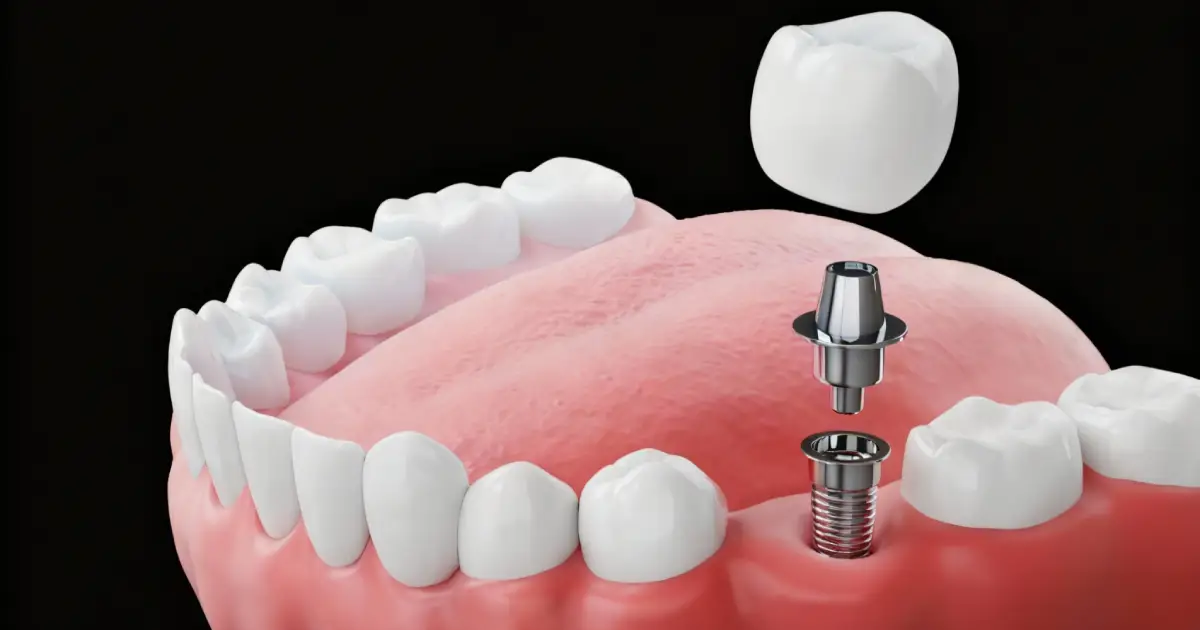
| Implant-retained overdenture | A whole arch, far more securely | Two to four implants it clips onto |
The lower denture problem, and how implants solve it
Upper dentures generally do well: the palate gives a large surface for suction to work against. Lower dentures are harder, because the tongue and the smaller ridge give far less to hold onto — which is why the most common complaint we hear is a bottom denture that lifts when you eat or talk.
Adding two implants to a lower denture changes that completely. The denture clips onto them and stays put, and patients routinely describe it as the difference between tolerating dentures and forgetting they are wearing them.
It also slows the ridge shrinkage that gradually loosens conventional dentures over the years. If a lower denture has been the frustration, this is the conversation worth having.
What to expect, step by step
Assessment and planning
We examine what teeth and bone remain, x-ray, and discuss what you want most — appearance, chewing strength, or the fewest visits. If any teeth need removing first, that is planned here.
Impressions and measurements
Precise impressions of the ridges, plus measurements of how your jaws meet and how much tooth shows when you smile and talk. This is where a natural result is won or lost.
The try-in
You see and wear a wax version before it is finished. Speak with it, look at it in a mirror, bring someone whose opinion you trust. Changes to shade, shape and position are easy now and hard later.
Fitting
The finished denture is fitted and adjusted. We check the bite and the borders and show you how to insert, remove and clean it.
Adjustments
Sore spots in the first weeks are normal and expected — that is not a badly made denture, it is a new appliance settling. We see you back to relieve them. Do not suffer through it at home.
Living with dentures
The first few weeks take practice. Start with soft food cut small, chew on both sides at once to keep the denture stable, and read aloud for a few minutes a day — speech normalises quickly once your tongue adapts.
Clean them daily over a basin of water or a folded towel, so a drop does not become a crack. Use a denture brush and cleaner, not regular toothpaste, which is abrasive enough to scratch the acrylic.
Leave them out overnight in water to let the tissues recover, and keep seeing us even if you have no natural teeth left — we check the fit, the health of the ridges and screen the soft tissues.
Expect a reline every few years. The jaw ridge continues to change shape after teeth are lost, so a denture that fit perfectly at first will loosen. That is the ridge changing, not the denture failing.
What dentures cost, and coverage
Cost varies with the type — a partial, a full set and an implant-retained overdenture are quite different propositions. We assess and give you a written plan before anything begins, and we will lay out the options at more than one level rather than present a single figure.
Most PPO plans contribute toward dentures, and Medi-Cal / Denti-Cal covers full and partial dentures for eligible adults, which makes a real difference for many of our patients. We verify your specific coverage before treatment. Financing is available for implant-retained options, and our affordable dentist in Fresno page covers the ways to make treatment manageable.
Immediate dentures, when teeth are coming out
If you still have teeth that need removing, one of the first decisions is whether to have a denture fitted the same day or wait for the gums to heal first. Both are reasonable and the trade-off is worth understanding.
An immediate denture is made in advance from impressions taken before the extractions, and fitted straight away at the same appointment. You never appear in public without teeth, which for most people is the deciding factor. It also acts like a dressing over the healing sockets, which many patients find more comfortable in the first days.
The cost is fit. Because it was made before the teeth came out, nobody can predict exactly how the ridge will heal, and heal it certainly will — the gum and bone shrink substantially over the first six months.
An immediate denture therefore needs relining, sometimes more than once, and often replacing after the first year. Budget for that from the start rather than discovering it later.
A conventional denture, made after several months of healing, fits considerably better from day one and needs less adjustment. The obvious difficulty is the interval without teeth, which many people simply cannot accommodate around work and family.
In practice most patients choose immediate and accept the relines, and we plan for that openly. Whichever route you take, expect sore spots in the early weeks — that is a new appliance settling against healing tissue, not a badly made denture. Come in and let us adjust it rather than persevering at home.
Dentures for Riverpark, North Fresno and nearby
We are at 6319 N Fresno St, Suite 101, minutes from Riverpark in north Fresno, with parking right outside the door. Patients come to us from Fresno, Clovis, Sanger, Selma, Fowler, Kerman, Reedley and Madera.
Dr. Kamaldeep Singh handles every case personally, from the first impressions to the final adjustment, and our team is bilingual in English and Spanish. If your current denture is loose, sore or you simply do not like how it looks, book a visit — a great deal can usually be improved.
Frequently asked questions
How long does it take to get used to dentures?
A few weeks for most people. Start with soft food cut small, chew on both sides at once, and read aloud daily to settle your speech. Sore spots early on are normal — come in and we will adjust them.
Why does my lower denture keep moving?
Lower dentures have far less to grip than uppers, because there is no palate and the ridge is smaller. Adding two implants to clip it onto solves this almost completely and is the single biggest improvement available.
Do I still need to see a dentist if I have no natural teeth?
Yes. We check the fit, the health of the ridges underneath and screen the soft tissues for anything changing. Oral cancer screening matters just as much when you have no teeth.
How often do dentures need replacing or relining?
Expect a reline every few years and replacement after roughly five to ten. The jaw ridge keeps changing shape after teeth are lost, so a denture that fitted perfectly will gradually loosen — that is the ridge, not the denture.
Will dentures look obviously false?
Not if they are planned properly. Shade, shape and position are chosen to suit your face, and you see a wax try-in and wear it before anything is finished. Bring someone whose opinion you trust to that appointment.
Does Medi-Cal cover dentures?
Yes — Denti-Cal covers full and partial dentures for eligible adults, and most PPO plans contribute as well. Bring your Benefits Identification Card and we will verify exactly what your plan covers before treatment.
Do you take Medi-Cal / Denti-Cal for this treatment?
Yes — we welcome Medi-Cal and Denti-Cal patients, and we also accept all major PPO insurance and cash. Bring your Benefits Identification Card and our team will verify what your plan covers before treatment.
Patient guides Dr. Kamaldeep Singh, DDS wrote on the questions that come up most.
- Implants vs Dentures for Seniors
Which works better, and in which circumstances.
5 min read → - Oral Care for Seniors
Looking after remaining teeth alongside a partial denture.
4 min read → - Life After Dental Implants
What implant-retained teeth change day to day.
4 min read →