
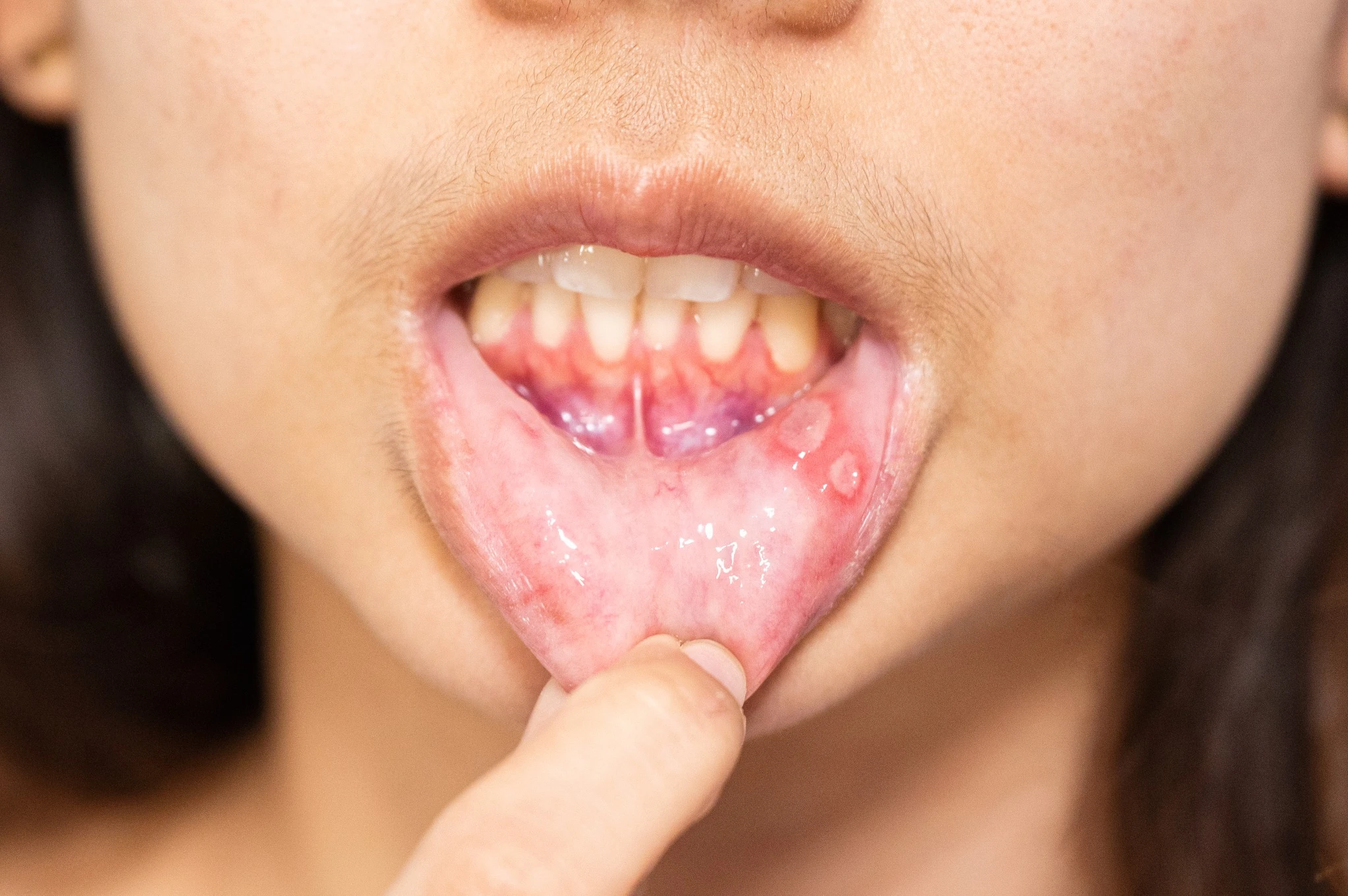
What gum disease is, and why it matters
Gum disease is a bacterial infection of the tissues that hold your teeth in place. It begins as gingivitis — inflamed, bleeding gums with no lasting damage — and if left, progresses to periodontitis, where the infection reaches the bone and starts destroying it.
The distinction matters enormously. Gingivitis is completely reversible with a professional clean and better daily habits. Periodontitis is not. Bone that has been lost does not grow back, so treatment aims to halt the damage and hold the line rather than restore what has gone.
It is also the leading cause of tooth loss in adults — ahead of decay — and most people carrying it have no idea.
The signs, and the one that misleads everyone
- Gums that bleed when you brush or floss
- Red, puffy or tender gums rather than firm and pale pink
- Persistent bad breath or a bad taste that does not shift
- Gums receding, so teeth look longer than they used to
- Sensitivity where the root has become exposed
- Teeth that feel loose, or that have started to drift or splay
- A change in how your teeth meet, or how a denture fits
Here is the part that misleads people: gum disease is painless until it is advanced. There is no toothache to prompt a visit. Patients routinely lose teeth to a condition that never once hurt.
And bleeding is not normal. Many people assume they are brushing too hard and start brushing more gently, which allows the plaque causing the inflammation to build up further. Healthy gums do not bleed. Bleeding is the earliest and most reliable warning you get — the one symptom worth acting on immediately.
How we measure it
Diagnosis is not guesswork. We measure the crevice between each tooth and the gum with a small probe, in millimetres, and record it around every tooth.
| Reading | What it means | Usual response |
|---|---|---|
| 1–3 mm, no bleeding | Healthy | Routine cleanings |
| 1–3 mm with bleeding | Gingivitis — reversible | Clean plus technique coaching |
| 4–5 mm | Early periodontitis; pocket you cannot reach | Deep cleaning, shorter recall |
| 6 mm and above | Advanced; significant bone lost | Deep cleaning, possible referral |
X-rays complete the picture by showing the bone level directly. Ask us for your numbers — tracked over years, they tell you more about your long-term dental health than almost anything else in your record.
How we treat it
Full assessment
Pocket measurements around every tooth, bleeding points, recession, mobility and x-rays. We show you the chart and explain what the numbers mean rather than simply announcing a treatment.
Scaling and root planing
The deep cleaning. Tartar and bacteria are removed from below the gum line and along the root surfaces, which are then smoothed so the gum can reattach. The area is numbed and it is usually done over two visits, one side at a time.
Technique coaching
This is not filler. Professional cleaning removes what has accumulated; what you do daily decides whether it comes back. We show you specifically where you are missing, using your own mouth.
Re-evaluation
Six to eight weeks later we re-measure. Pockets should have shrunk and bleeding stopped. This is how we know it worked, rather than assuming.
Maintenance
Once treated, you move onto a three or four month recall instead of six. Gum disease is managed, not cured — and the maintenance interval is what keeps it stable.
Gum disease and the rest of your health
The link between gum disease and general health is real and increasingly well documented. Periodontitis is associated with cardiovascular disease, and the relationship with diabetes runs both ways — poorly controlled blood sugar worsens gum disease, and treating gum disease measurably improves blood sugar control. There are also established associations with pregnancy complications and respiratory infections.
The mechanism is not mysterious: advanced periodontitis presents a substantial area of ulcerated, infected tissue with direct access to the bloodstream, sustaining a low-grade inflammatory load. If you are diabetic, pregnant, or managing heart disease, gum health is worth more attention than it usually gets.
What treatment costs, and coverage
Cost depends on how advanced the disease is and how many areas of the mouth need deep cleaning. We measure and x-ray first, then give you a written plan — including the ongoing maintenance interval, so you know what you are committing to rather than just the first appointment.
Most PPO plans cover scaling and root planing well, as it is classed as necessary treatment, and Medi-Cal / Denti-Cal covers periodontal treatment for eligible patients. We verify benefits before starting. Treating gum disease is also, plainly, far cheaper than replacing the teeth it takes — a course of deep cleaning costs a fraction of a single implant.
Gum disease treatment for Riverpark, North Fresno and nearby
We are at 6319 N Fresno St, Suite 101, minutes from Riverpark in north Fresno, with parking right outside. Patients come to us from Fresno, Clovis, Sanger, Selma, Fowler, Kerman and Madera.
Dr. Kamaldeep Singh assesses and treats every case personally, and our team is bilingual in English and Spanish. If your gums bleed when you brush, book a visit now rather than waiting for it to hurt — because it will not.
Frequently asked questions
Is it normal for gums to bleed when I brush?
No. Healthy gums do not bleed. Bleeding is the earliest warning sign of gum disease and the one worth acting on immediately — brushing more gently in response actually makes it worse.
Can gum disease be cured?
Gingivitis, the early stage, is fully reversible. Once it has progressed to periodontitis and bone has been lost, that bone does not grow back — treatment halts the damage and keeps it stable, which is why catching it early matters so much.
What is scaling and root planing?
A deep cleaning that removes tartar and bacteria from below the gum line and smooths the root surfaces so the gum can reattach. The area is numbed and it is usually done over two visits, treating one side at a time.
Does gum disease hurt?
Not until it is advanced, which is precisely the problem. There is no toothache to prompt a visit, and people routinely lose teeth to a condition that never once caused them pain.
Why do I need cleanings every three months now?
Once you have had periodontitis, the bacteria repopulate deeper pockets faster than six months allows. A three or four month maintenance interval is what keeps the disease stable and stops further bone loss.
Is gum disease linked to other health problems?
Yes. It is associated with cardiovascular disease, pregnancy complications and respiratory infection, and the link with diabetes runs both ways — treating gum disease measurably improves blood sugar control.
Do you take Medi-Cal / Denti-Cal for this treatment?
Yes — we welcome Medi-Cal and Denti-Cal patients, and we also accept all major PPO insurance and cash. Bring your Benefits Identification Card and our team will verify what your plan covers before treatment.
Patient guides Dr. Kamaldeep Singh, DDS wrote on the questions that come up most.
- Periodontal Therapy in Fresno
What deep cleaning involves and how the gums respond.
5 min read → - Oral Health and Overall Health
The links between gum disease and the rest of the body.
4 min read → - How Smoking Affects Your Gums
Why gum disease is harder to spot and harder to treat in smokers.
4 min read →