How clear aligners straighten teeth
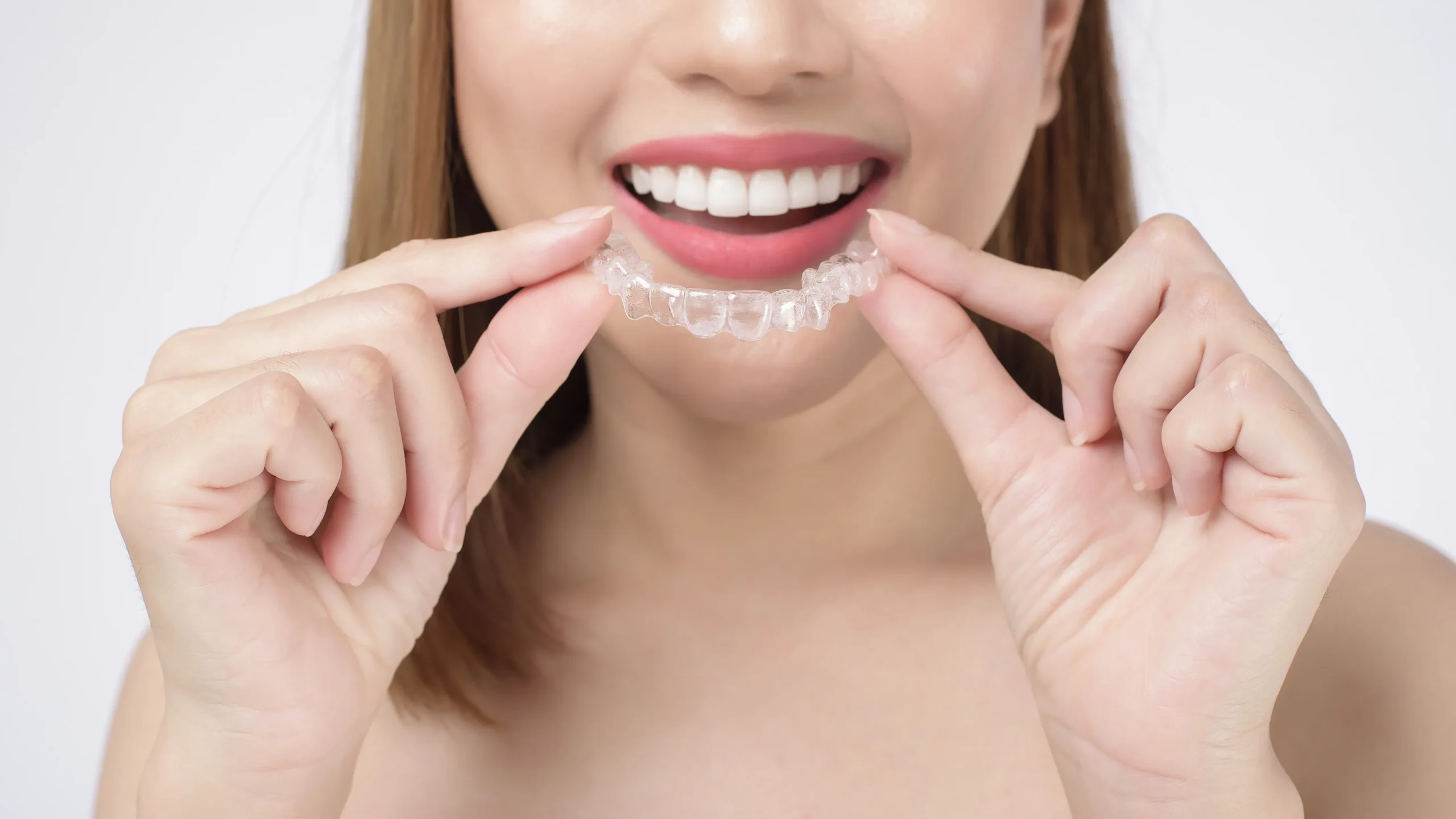
Clear aligners are a series of thin, transparent trays worn over the teeth. Each tray is shaped very slightly differently from the last, so wearing them in sequence walks your teeth along a planned path a fraction of a millimetre at a time.
You change trays roughly every one to two weeks and wear them 20 to 22 hours a day, removing them to eat and to brush.
The mechanics are the same as braces — steady, gentle pressure over months — but the delivery is different. There are no brackets bonded to your teeth and no wires to tighten, and because the trays come out, nothing is off the menu and cleaning stays straightforward.
What clear aligners can and cannot fix
Aligners handle the majority of adult cases well: crowding, spacing, teeth that have shifted back after childhood braces, mild to moderate bite problems, and the front-teeth crookedness that most people actually want addressed.
They are less suited to severely rotated teeth, large vertical movements, and complex bite corrections that need the precise control fixed brackets give. We will tell you at the consultation which category you fall into rather than start treatment that stalls halfway. Where a case sits on the edge, we say so plainly and lay out both routes.
Clear aligners compared with fixed braces
| Clear aligners | Fixed braces | |
|---|---|---|
| Visibility | Nearly invisible | Visible brackets |
| Removable | Yes — for meals and cleaning | No |
| Food restrictions | None | Several |
| Cleaning | Normal brushing and flossing | More involved |
| Depends on | Your discipline in wearing them | Being fixed in place |
| Office visits | Fewer, shorter | Regular adjustments |
The honest trade-off is the last row but one. Aligners only work while they are in your mouth. Patients who leave them out for hours at a time do not finish on schedule, and no amount of technology compensates for that.
What to expect, step by step
Assessment and scan
We check your teeth, gums and bite, then take a digital scan. Any decay or gum inflammation is treated first — teeth should not be moved through unhealthy tissue.
Digital treatment plan
Your scan is used to plan every movement and produce a preview of the finished result, along with a realistic estimate of how many trays and how many months it will take.
Fitting your first trays
Small tooth-coloured attachments are sometimes bonded to certain teeth to give the trays something to grip. We check the fit and show you how to seat and remove them properly.
Progressing through the series
You change trays on schedule at home and see us periodically to confirm the teeth are tracking the plan. Most people feel mild pressure for a day after each new tray — that is the treatment working.
Retention
When the teeth are where they should be, you move into a retainer. This part is not optional: teeth drift back for years afterwards, and retention is the difference between a result that holds and one that quietly undoes itself.
Clear braces for teenagers and adults in Fresno
Aligner treatment splits fairly evenly between two groups of patients, and their reasons for choosing it are quite different.
Adults make up most of our aligner cases, and a large share are treating crowding that came back after childhood braces — usually because the retainer was abandoned years ago. Teeth drift throughout life, and lower front crowding is the most common complaint we hear.
Adults choose aligners because there is no visible hardware in meetings or photographs, appointments are fewer and shorter, and there are no wire emergencies at inconvenient moments. Adult bone remodels more slowly than a teenager, so treatment can take a little longer, and existing crowns, bridges or implants have to be planned around — implants do not move, so the plan must work with them rather than through them.
Teenagers are candidates once their adult teeth are through. The practical question is not whether aligners can straighten their teeth but whether the trays will actually be worn for twenty hours a day.
For a self-conscious teenager that invisibility is frequently what makes treatment acceptable at all, and a motivated teenager will often outperform an adult. For one who will leave them in a school bag, fixed braces are the honest recommendation and we will say so.
Either way, retention is what determines whether the result holds. The most common regret we hear from adults in their thirties is not about the braces they had — it is about the retainer they stopped wearing at sixteen.
What clear aligners cost in Fresno, and paying for them
Cost tracks the complexity of the case and the number of trays it takes — a mild front-teeth correction and a full-arch case are different propositions. After the scan we give you a written plan with the number of trays, the expected timeline and the total, before anything is ordered.
Many PPO plans include orthodontic benefit that applies to clear aligners just as it would to braces, and there is often a lifetime orthodontic maximum worth checking. We verify your benefits before you commit. Financing is available in monthly instalments, and retainers should be budgeted for as part of the treatment rather than a surprise at the end.
Clear aligners for Riverpark, North Fresno and nearby
Our office is at 6319 N Fresno St, Suite 101, minutes from Riverpark in north Fresno, with parking outside. We treat aligner patients from Fresno, Clovis, Sanger, Selma, Fowler, Kerman and Madera.
Dr. Kamaldeep Singh plans and monitors every case personally, and our team is bilingual in English and Spanish. If you are weighing aligners against traditional braces, our guide comparing Invisalign and braces in Fresno goes through the decision in more depth — or book a consultation and we will scan your teeth and tell you which route actually suits your case.
Frequently asked questions
How long do clear aligners take to work?
Most cases run six to eighteen months. Mild front-teeth crowding can finish in under six; complex cases take longer. After your scan we give you a specific number of trays and months rather than a general range.
How many hours a day do I have to wear them?
Twenty to twenty-two hours — essentially everything except eating, drinking anything other than water, and brushing. This is the single biggest factor in whether you finish on schedule.
Do clear aligners hurt?
You feel mild pressure or tenderness for about a day after fitting each new tray, which is the teeth moving. Most people manage without pain relief, and it eases as you get further into the series.
Can I eat and drink with aligners in?
Take them out to eat and for anything other than plain water — coffee and tea will stain the trays, and sugary drinks get trapped against the teeth. Rinse or brush before putting them back in.
Will I need a retainer afterwards?
Yes, and it is not optional. Teeth drift for years after treatment, so retention is what makes the result permanent. Budget for retainers as part of the treatment from the start.
Does insurance cover clear aligners?
Many PPO plans include orthodontic benefit that applies to aligners as it would to braces, often with a lifetime orthodontic maximum. We verify your specific plan before you commit so there are no surprises.
Do you take Medi-Cal / Denti-Cal for this treatment?
Yes — we welcome Medi-Cal and Denti-Cal patients, and we also accept all major PPO insurance and cash. Bring your Benefits Identification Card and our team will verify what your plan covers before treatment.
Patient guides Dr. Kamaldeep Singh, DDS wrote on the questions that come up most.
- Invisalign vs Braces in Fresno
Cost, time and comfort, side by side.
5 min read → - Why Choose Invisalign Over Braces
What the trays do better, and what they do not.
4 min read → - Straightening Teeth Without Braces
The options when you do not want fixed hardware.
4 min read →