How braces straighten teeth
Braces work by applying light, continuous pressure through brackets bonded to each tooth and a wire threaded between them. Bone responds to that pressure by remodelling — dissolving slightly ahead of the tooth and rebuilding behind it — which is what allows a tooth to move through the jaw without loosening.
Because the brackets are fixed in place, they work every hour of every day whether you think about them or not. That is their fundamental advantage over removable treatment, and it is why complex cases are still routinely treated with braces even in an era of clear aligners.
Metal or ceramic braces?
| Metal braces | Ceramic braces | |
|---|---|---|
| Appearance | Visible stainless steel | Tooth-coloured, far less noticeable |
| Strength | Extremely durable | Strong, but more prone to chipping |
| Treatment time | Fastest for complex movement | Sometimes slightly longer |
| Staining | Brackets do not stain | Ties can pick up colour between visits |
| Cost | Lower | Higher |
| Best for | Teenagers, complex cases, value | Adults who want discretion but need fixed braces |
Ceramic brackets on the upper front teeth with metal further back is a common compromise — the visible teeth stay discreet, the working teeth stay robust, and the cost sits in between.
Braces or clear aligners?
This is the question almost every patient arrives with, and the honest answer depends on the case rather than on preference alone.
Braces are the better choice for significant crowding, teeth that need rotating substantially, large vertical movements, and bite corrections that need precise control in three dimensions. They also remove the compliance question entirely, which matters for a teenager who will not reliably wear trays.
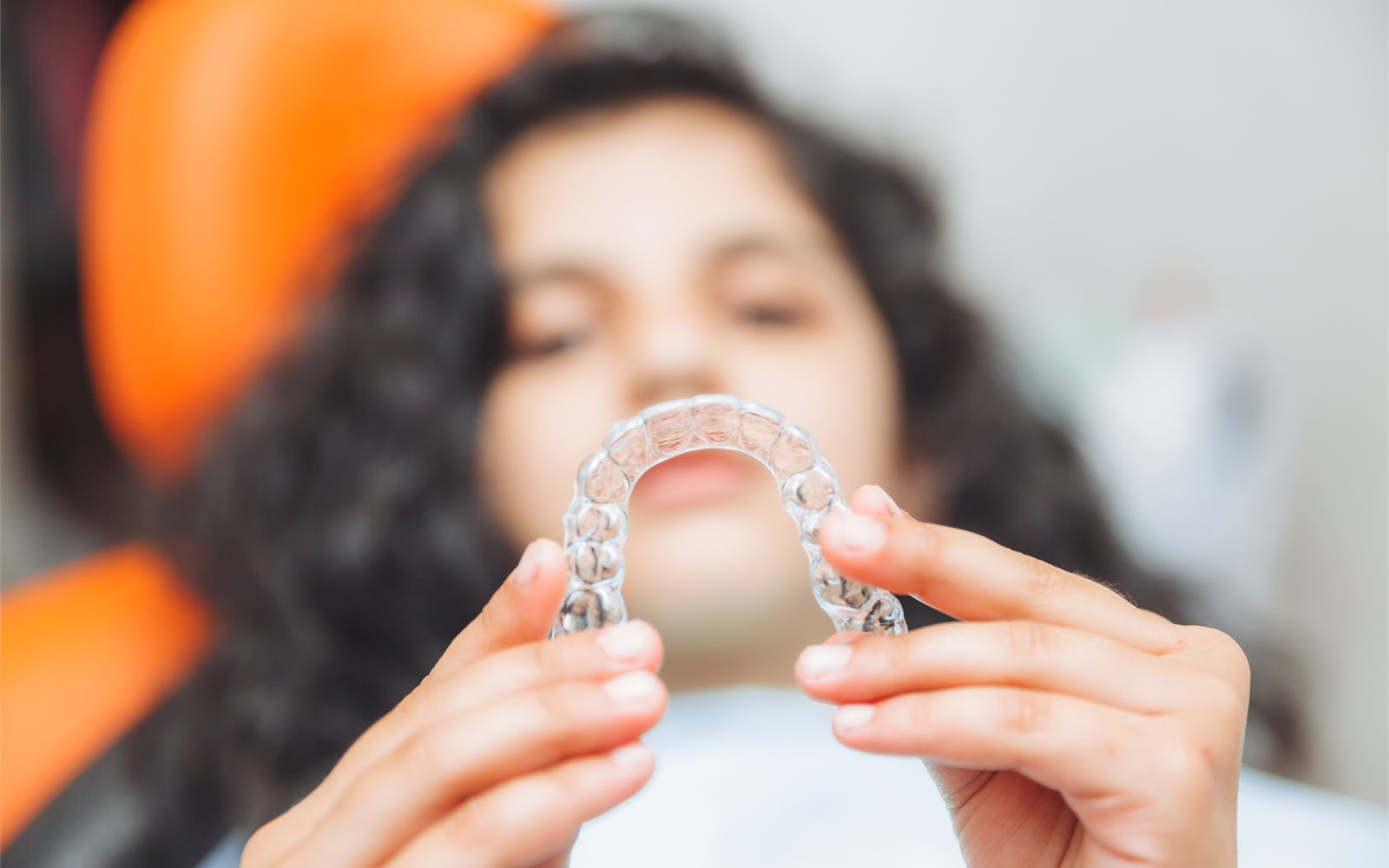
Clear aligners suit mild to moderate crowding and spacing, adult relapse after childhood braces, and anyone whose priority is that treatment not be visible. They come out to eat and to clean, which many adults value highly.
We scan and assess before recommending either. Where a case genuinely could go both ways we will say so and lay out the trade-offs rather than steer you toward one. Our guide comparing Invisalign and braces in Fresno goes into the decision in more depth.
What to expect, step by step
Assessment and records
Examination, x-rays, photographs and a digital scan. Any decay or gum disease is treated first — teeth should never be moved through unhealthy tissue.
Treatment plan
We map out which teeth move where, whether any extractions are needed to create space, and how long it should take. You get the timeline and cost in writing before anything is bonded.
Fitting the braces
Brackets are bonded to each tooth and the first wire is placed. It takes a while but is not uncomfortable. Expect tenderness for a few days afterwards as the teeth begin to move.
Adjustment visits
Every four to eight weeks the wire is changed or tightened to keep progress moving. Visits are short, and this steady rhythm is what carries the treatment along.
Removal and retention
Braces come off, the teeth are polished, and you move straight into retainers. This last step is not the end of treatment — it is what makes the result permanent.
Braces for teenagers and adults
Teenagers remain the classic candidates. The jaw is still developing, which makes some corrections easier and faster than they will ever be again, and there is no reliance on remembering to wear anything. The practical demands are dietary — no hard, sticky or chewy foods that snap brackets off — and brushing properly around the hardware, which takes longer and matters more than usual.
Adults increasingly choose fixed braces too, particularly where a case is too complex for aligners. Adult bone remodels more slowly, so treatment can run a little longer, and existing crowns, bridges and implants have to be planned around, since an implant will not move. Ceramic brackets make the whole thing far less conspicuous than most adults expect.
Living with braces
The first week is the hardest, and knowing that helps. Teeth feel tender for two to four days after fitting and after each adjustment — soft food and ordinary pain relief cover it. Brackets can rub the inside of the lips until the tissue toughens up, and orthodontic wax pressed over the offending bracket solves it immediately.
Cleaning is where treatment succeeds or fails cosmetically. Plaque left around brackets demineralises the enamel and leaves permanent white square marks when the braces come off — a genuinely disappointing outcome after two years of work, and entirely preventable. Brush after every meal, use an interdental brush around each bracket, and keep up your hygiene visits throughout treatment.
Avoid hard and sticky foods: ice, boiled sweets, toffee, nuts, popcorn kernels, and biting directly into apples or corn on the cob. Cut hard food into pieces instead. If a bracket comes loose or a wire starts poking, call us — it is a quick fix and not worth enduring.
What braces cost, and coverage
Cost depends on the complexity of the case, how long treatment runs, and whether you choose metal or ceramic. After the scan and assessment you get a written plan with the full treatment time and cost, so nothing is open-ended.
Many PPO plans include an orthodontic benefit with a lifetime maximum — separate from your annual maximum — which applies to braces.
Denti-Cal covers orthodontic treatment for eligible children and teenagers where there is a qualifying medical need, and we will assess that honestly rather than raise hopes. We verify your specific benefits before you commit, and financing is available in monthly instalments across the treatment period.
Braces for Riverpark, North Fresno and nearby
Our office is at 6319 N Fresno St, Suite 101, minutes from Riverpark in north Fresno, with easy parking — which matters when you are coming back every few weeks for adjustments. We treat orthodontic patients from Fresno, Clovis, Sanger, Selma, Fowler, Kerman and Madera.
Dr. Kamaldeep Singh plans and monitors every case personally, so the same person who designed your treatment is the one adjusting it.
Our team is bilingual in English and Spanish, which helps when a parent and teenager are making the decision together. Book an assessment and we will scan, show you what is achievable and tell you honestly whether braces or aligners suit your case.
Frequently asked questions
How long do braces take?
Most cases run eighteen months to three years, depending on how much movement is needed. Minor corrections finish faster. After your scan we give a specific estimate rather than a general range.
Are braces or clear aligners better?
It depends on the case. Braces handle significant crowding, rotations and bite corrections better, and remove the question of whether trays get worn. Aligners suit mild to moderate cases and anyone who wants treatment to be invisible.
Do braces hurt?
Teeth feel tender for two to four days after fitting and after each adjustment, which soft food and ordinary pain relief handle. Brackets can rub the lips at first — orthodontic wax over the bracket fixes that immediately.
What can I not eat with braces?
Avoid ice, hard sweets, toffee, nuts, popcorn kernels and biting straight into apples or corn on the cob. Cut hard foods into pieces instead. Sticky and chewy foods are what pull brackets off.
Will I need a retainer after braces?
Yes, and it is not optional. Teeth drift for years after treatment, so retainers are what make the result permanent. The most common regret we hear from adults is stopping their retainer as a teenager.
Does insurance or Denti-Cal cover braces?
Many PPO plans include a separate lifetime orthodontic maximum that applies to braces. Denti-Cal covers orthodontics for eligible children and teenagers where there is a qualifying medical need. We verify your specific plan before you commit.
Do you take Medi-Cal / Denti-Cal for this treatment?
Yes — we welcome Medi-Cal and Denti-Cal patients, and we also accept all major PPO insurance and cash. Bring your Benefits Identification Card and our team will verify what your plan covers before treatment.
Patient guides Dr. Kamaldeep Singh, DDS wrote on the questions that come up most.
- Invisalign vs Traditional Braces
The honest comparison, including where braces win.
4 min read → - Invisalign vs Braces in Fresno
Cost, time and comfort, side by side.
5 min read → - Straightening Teeth Without Braces
When aligners are the better route, and when they are not.
4 min read →