Why retainers are not optional
Teeth do not settle permanently once they are straight. The fibres in the gum that were stretched during treatment carry an elastic memory and pull the teeth back toward where they started, and that tendency is strongest in the first year but never fully disappears.
On top of that, teeth drift throughout life regardless of whether you have had treatment. Lower front crowding in your thirties is extremely common in people who never wore braces at all. A retainer is not so much finishing your orthodontic treatment as holding a position against a lifelong drift.
This is the single most common regret we hear. Adults who spent two or three years in braces as teenagers, stopped their retainer after a year, and now have crowding back — often paying for treatment a second time. Retainers are by a wide margin the cheapest part of orthodontics and the part that determines whether the rest was worth it.
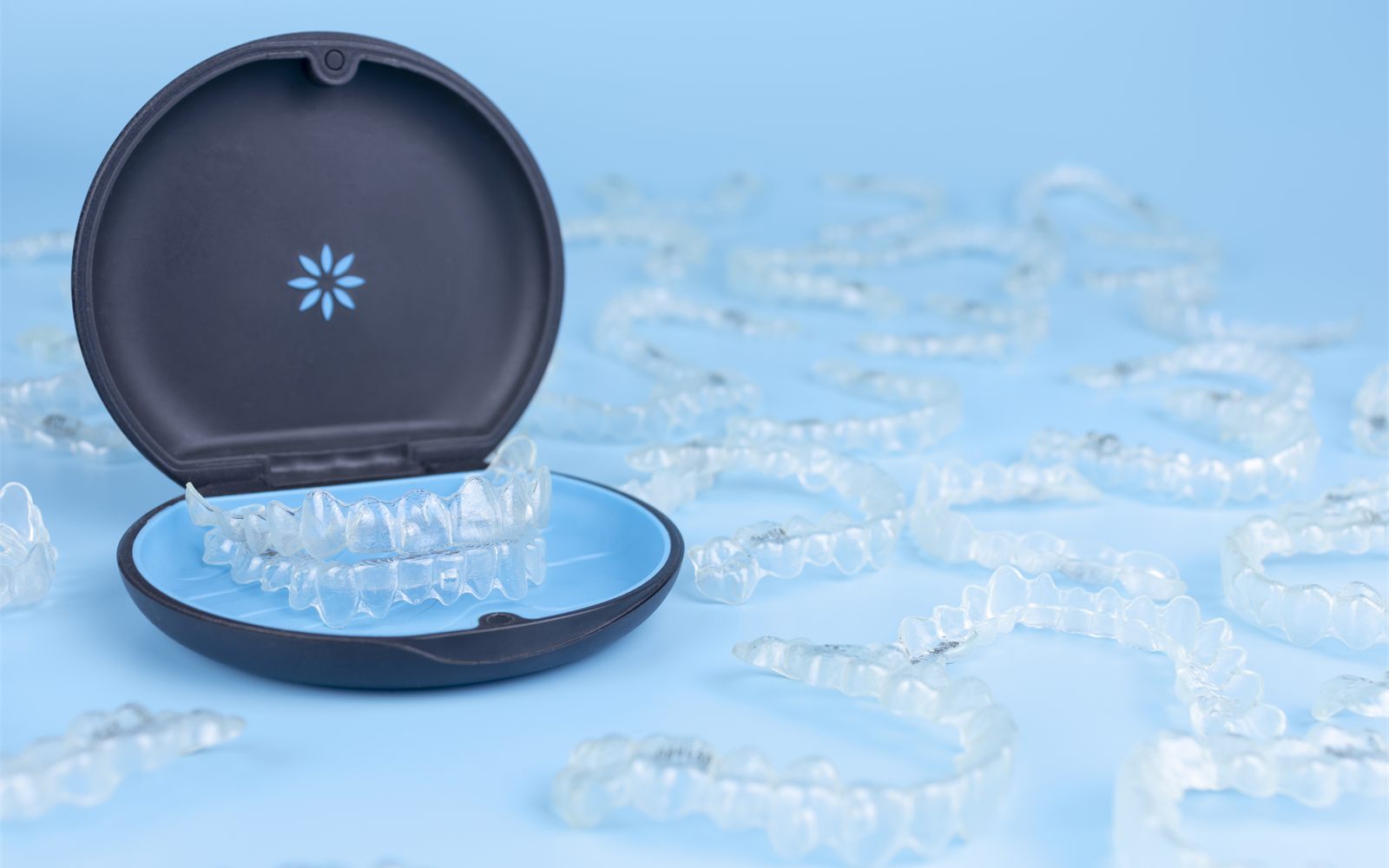
The types, and what suits whom
| Clear removable | Hawley (wire and plate) | Fixed bonded wire | |
|---|---|---|---|
| Appearance | Nearly invisible | Visible front wire | Hidden behind the teeth |
| Worn | Nights | Nights | Permanently in place |
| Durability | 1–3 years, then replace | Many years | Years, can debond |
| Compliance needed | Yes | Yes | None |
| Cleaning | Simple, comes out | Simple, comes out | Needs threaded floss daily |
| Adjustable | No — remade | Yes, minor tweaks | No |
Many patients end up with a combination: a fixed wire behind the lower front teeth, where relapse is most stubborn, plus a clear removable retainer on top worn at night. That covers both the teeth most likely to move and the arch where a visible wire would bother you.
How long do you have to wear them?
The honest answer is indefinitely, at a reducing schedule. Typically full-time for the first few months after treatment, then nights only for the first year or two — and then nights a few times a week, more or less for good.
Once you are on nightly wear, a couple of nights a week is enough to hold the position for most people, and it is a small habit for a permanent result.
A useful test: if the retainer feels tight when you put it in, your teeth have started to move and you have left it too long between wears. Wear it every night for a week and reassess.
If it will not go in at all, do not force it. Come and see us — forcing a retainer that no longer fits can move teeth in unintended directions or crack the appliance.
Lost, broken, or years since you last wore one
These are the three situations that bring most people to this page, and all three are fixable.
Lost or broken retainer
Get a replacement made as quickly as you can. Teeth begin moving within days, and the longer the gap the more likely the new retainer will not fit the position you had. If you still have the old one, even broken, bring it in.
Assessment and scan
We check where your teeth are now, then scan. If they have shifted only slightly we can usually make a retainer to the current position and hold it there, which stops any further drift.
When teeth have moved significantly
If there has been real relapse, a retainer alone will only preserve the crowding. A short course of clear aligners can move things back before we retain — often a matter of months rather than the years the original treatment took.
Fitting and instructions
We check the fit, show you how to seat and remove it without distorting it, and set your wear schedule.
Keeping a spare
Anyone who has lost one knows why this matters. Having a second set made at the same time costs far less than an emergency replacement plus the movement in between.
Looking after a retainer
Rinse it in cool water every time it comes out, and brush it gently with a soft brush and mild soap — not toothpaste, which is abrasive and clouds clear plastic over time. Let it dry before it goes in the case, because a damp retainer in a closed box grows bacteria fast.
Never use hot water and never leave it in a car, on a windowsill or near a radiator. The plastic warps with heat and a distorted retainer either will not fit or will actively move teeth the wrong way. Always use the case: retainers wrapped in a napkin at a restaurant are thrown away with astonishing regularity, and dogs find them irresistible.
Bring it to your checkups so we can look at the fit. A retainer that has become loose is not holding anything.
What retainers cost, and coverage
A retainer costs a small fraction of orthodontic treatment, and a replacement costs far less than re-treating relapse. We scan and quote before anything is made, and we will usually suggest a spare set at the same time because the marginal cost is small.
Retainers provided at the end of orthodontic treatment are often included in the original plan or covered under an orthodontic benefit. Replacements are usually not covered by insurance. We check your plan and tell you before you commit.
Retainers for Riverpark, North Fresno and nearby
We are at 6319 N Fresno St, Suite 101, minutes from Riverpark in north Fresno, with easy parking. Patients come to us from Fresno, Clovis, Sanger, Selma, Fowler, Kerman and Madera — including plenty who had their braces done elsewhere and simply need a retainer replaced.
You do not need to have been treated here. Bring in your old retainer if you have it, and Dr. Kamaldeep Singh will assess where your teeth are now and what will hold them. Our team is bilingual in English and Spanish.
Frequently asked questions
How long do I need to wear a retainer?
Indefinitely, on a reducing schedule — full-time for the first few months, nights for the first year or two, then a few nights a week more or less permanently. Teeth drift throughout life, not just after treatment.
I lost my retainer. What should I do?
Get a replacement made as soon as you can — teeth begin moving within days. You do not need to have been treated here. Bring the old one if you still have it, even broken, and we will scan and remake it.
My retainer feels tight. Is that bad?
It means your teeth have started to move and you have gone too long between wears. Wear it every night for a week and it usually settles. If it will not go in at all, do not force it — come in and we will assess.
What if my teeth have already shifted back?
If the movement is slight we can make a retainer to your current position to stop further drift. If there has been real relapse, a short course of clear aligners can move things back first — often months rather than years.
Fixed or removable retainer — which is better?
Fixed wires need no discipline and suit the lower front teeth where relapse is most stubborn, but need threaded floss daily. Removable ones are easier to clean but only work if worn. Many patients have both.
How should I clean my retainer?
Rinse in cool water and brush gently with a soft brush and mild soap, not toothpaste — it scratches and clouds the plastic. Dry it before it goes in the case, and never use hot water or leave it in a hot car.
Do you take Medi-Cal / Denti-Cal for this treatment?
Yes — we welcome Medi-Cal and Denti-Cal patients, and we also accept all major PPO insurance and cash. Bring your Benefits Identification Card and our team will verify what your plan covers before treatment.
Patient guides Dr. Kamaldeep Singh, DDS wrote on the questions that come up most.
- Straightening Teeth Without Braces
The options when teeth have drifted back after treatment.
4 min read → - Invisalign vs Braces in Fresno
If relapse needs correcting, this is the choice you face again.
5 min read → - Daily Oral Hygiene Guide
Cleaning around a fixed retainer, and the rest of the routine.
4 min read →